Tag: amputation

Father-Son Patient Story Blog - Chris Roy

A Father and Son Share Their Experience Navigating Limb Loss

Chris and Chris Jr. didn’t expect limb loss to become their common language. But over the past several years, their father-son bond has taken on a deeper meaning as they navigate limb loss, a journey neither of them expected.


What began as separate medical challenges became a shared experience that reshaped not only their physical lives, but their relationship with each other. Through surgeries, setbacks, and hard-earned milestones, this father and son have learned what it truly means to lean on one another and to keep moving forward, together.

A Father’s Inspiring Courage After Limb Loss

Chris’ journey began years ago with complications from diabetes. After losing his big toe on his right leg, he was referred to Hanger Clinic, where he received a specialized diabetic shoe to help him adjust. For a while, he managed. After about five years later, his condition worsened, leading to a transmetatarsal amputation (TMA) on his right foot. Due to his diabetes, healing was slow and complex, requiring advanced wound care.

In 2016, Chris developed an infection. Rather than facing what would potentially be repeated gradual loss, he chose to undergo a more significant amputation. “I didn’t want to go through that again,” he recalls. Following surgery and recovery, his right leg eventually stabilized, and life moved forward.

But in July 2020, another challenge emerged, this time in his left foot. What started as a blister quickly escalated. Within days, his foot darkened, and the pain became severe. Remembering his previous experience, Chris did not want to experience what would likely be another prolonged fight with infection. He made the decision to amputate his left leg below the knee, deciding this was his best path forward.

Through it all, Chris adapted. He learned to walk again using his prosthesis, gaining independence step by step. His journey wasn’t easy, but it shaped him into a source of knowledge and strength, something his son would come to rely on years later.

Years Later, Son Experiences Limb Loss  

Chris Jr.’s journey began more suddenly. In May 2025, he traveled to Dallas for a convention, spending days on his feet. By the time he returned home, he had developed severe blisters. At first, it seemed manageable despite his diabetes. His left foot healed, but his right foot didn’t. For six months, the infection persisted, despite treatment attempts. Then one day, everything changed.

“I collapsed trying to get out of bed,” Chris Jr. recalled. “I didn’t know what was going on.”

Given what they had already experienced, Chris Jr.’s mother didn’t hesitate and urged him to go straight to the hospital. Upon arrival, doctors immediately discovered sepsis. He underwent emergency surgery resulting in a partial foot amputation, but the infection continued to spread. Ultimately, Chris Jr. underwent a below-knee amputation. He spent 22 days between the hospital and rehab, facing both physical and emotional hurdles.

“It was scary,” he admits. “Trying to comprehend life without a leg.”

Leaning on Each Other as Father and Son 

For the first time, their roles began to shift.

“When my dad first lost his leg, I didn’t fully understand,” Chris Jr. recalled. “Then it happened to me and I quickly realized how tough it really is!”

Chris became his son’s steady source of reassurance, guiding him through his first prosthetic fitting, phantom limb pain management, and the emotional weight of adjustment. But the support flowed both ways.

“I’ve learned a lot from my son,” Chris said. “During COVID, I didn’t go to rehab like he did. He showed me things and tricks I didn’t know. We’re really leaning on each other.”

Chris once needed help adjusting to life after limb loss, and Chris Jr. now faces those same challenges, and their relationship has come full circle. They bond over shared experiences, exchanging videos they come across online about new prosthetic technology and encouraging each other to keep going. The two admitted some days are still harder than others.

“There are times I feel completely defeated, and my dad reminds me that it’s okay to rest, that I don’t have to push through everything,” Chris Jr. shared.

Chris added, “I check in with Chris Jr., help him manage the pain, and talk through phantom sensations. We just keep each other going.”

Celebrating in Each Other’s Successes 

Both have celebrated meaningful milestones along the way. For son Chris Jr., standing for the first time without support was transformative.

“I went so long thinking I’d never stand again,” Chris Jr. said.

For dad Chris, each advancement in prosthetic technology has opened new doors. With a newer, more advanced ankle, he’s able to walk more naturally.

Both continue to work toward new goals now. Chris Jr. dreams of driving again using a left-foot pedal and hopes to one day volunteer in rehabilitation centers, offering guidance to others just beginning their journey. Chris hopes to ride a bike again, and maybe even run.

Patient-Centered Care 

A big part of their progress has come through the care and support they’ve received at Hanger Clinic in Greenville, South Carolina.

“From the moment you walk in, you’re treated like family,” Chris said. “It doesn’t feel like a typical doctor’s office.”

They credit their clinician, Brittney Curcio Barrientos, MSPO, CPO, for helping them not just recover and learn to best use their prostheses, but truly live again by connecting them with resources, support groups, and a broader amputee community they didn’t even know existed.

“She’s helping us live life to the fullest,” Chris Jr. shared.

Maternal Support When It Matters Most 

Their wife and mother, Pam, has been the constant source of strength throughout both journeys. 

“She holds our entire family together,” they both shared. “We’d be nothing without her!”

From sitting beside them in the hospital to managing the countless details of their care, her support has been unwavering.

The Path Forward for Father and Son 

Today, Chris and Chris Jr. continue moving forward. Two men with the same name, similar paths, and a shared understanding of resilience.

Together, they are proof that even in life’s hardest moments, strength can be shared and hope can be rebuilt, one step at a time.

This Father’s Day, we’re sharing the stories of Chris and Chris Jr. This father and son didn’t plan to navigate limb loss together. Years after Chris first faced amputation, his son faced the same experience. But this time, they had each other, and the expertise of Hanger Clinic’s team. What unfolded was a journey where roles reversed, wisdom was shared, and both discovered that the right prosthetics and clinical support, combined with someone who truly understands your journey, changes everything.
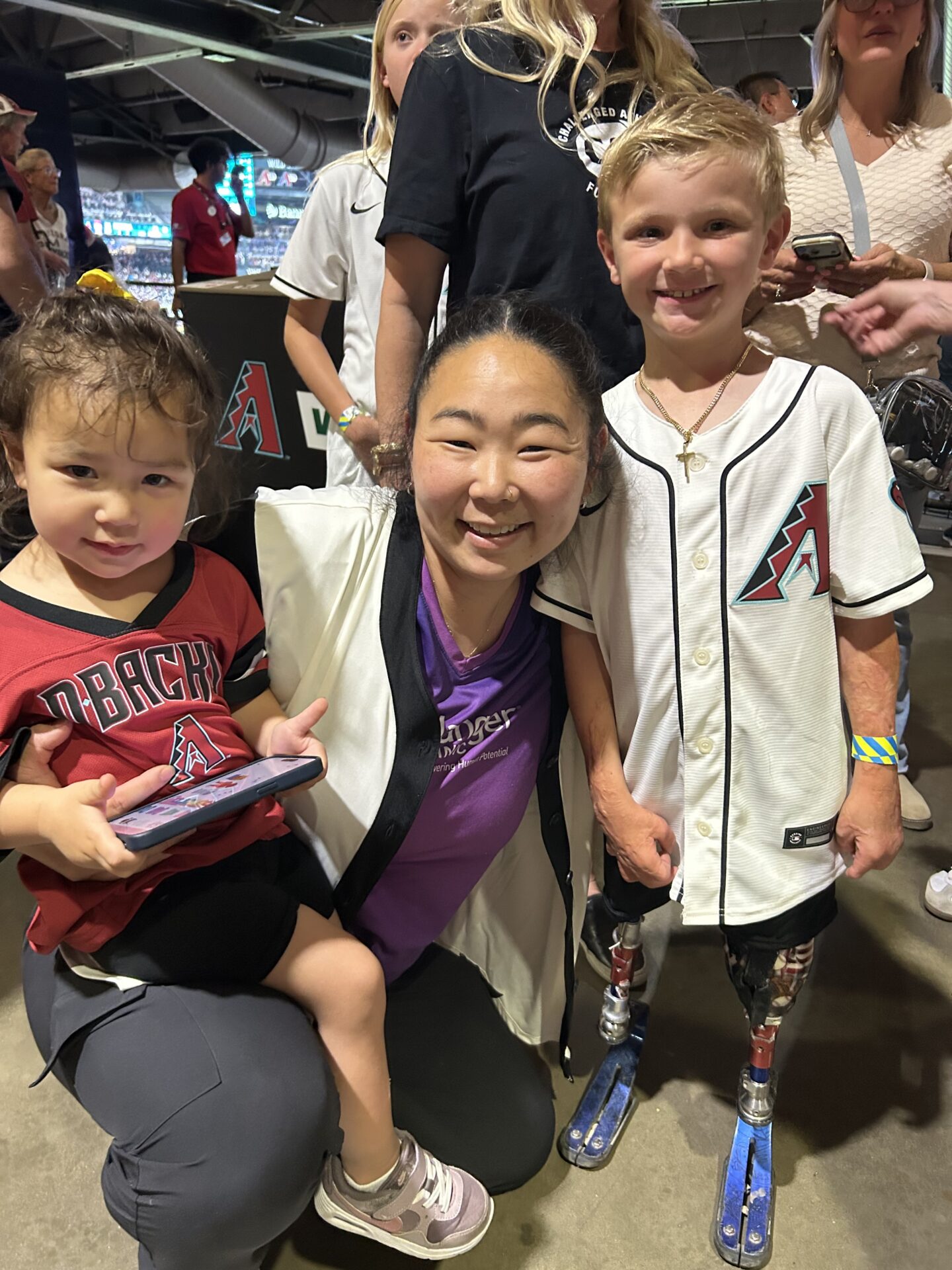
Eight-Year-Old Beauden Demonstrates Strength and Perseverance Following Double Amputation

In honor of Limb Loss and Limb Difference Awareness Month, we’re sharing the story of Beauden Baumkirchner, an eight-year-old boy whose life changed dramatically after what seemed like a minor childhood injury. A skinned knee led to a rare and aggressive staph infection, resulting in nearly three months in the hospital, 22 surgeries, the loss of several fingers, and ultimately, bilateral above-knee amputation to save his life. Today, he plays baseball at Lake Havasu Little League and continues to inspire everyone around him with his determination and love for the game.


A Small Scrape That Changed Everything 

During a family vacation in 2020, Beauden fell off his bicycle and scraped his knee, an injury no one would suspect to be serious. Just 48 hours later, he was admitted to the pediatric intensive care unit, where he remained for more than two months. Beauden had developed septic shock caused by a severe staph infection. Despite aggressive treatment, doctors ultimately had to perform above-knee amputations on both legs as well as multiple finger amputations to save Beauden’s life.  

Compassionate Clinical Care 

Beauden continues to make incredible progress thanks to his fighting spirit, a strong support system (including proud mom and dad and two doting sisters), and the compassionate care from his Phoenix Hanger Clinic team. His Hanger Clinic Pediatric Specialist and prosthetist Jillian Okimoto, CPO, describes Beauden as a source of joy for everyone he meets.   

Jillian has been caring for Beauden since January 2021 and said, “Watching him grow has been such a fun ride. I’ve had the chance to see him grow comfortable in his own body and truly settle into his new normal.”

When we asked Jillian about what it means to be Beauden’s prosthetist, she shared, “It means wearing a lot of hats—being a friend, a fun extension of his care team and family, and someone who’s always ready to take on whatever new activity or challenge he wants his prosthetics to handle next. That’s what makes this field so rewarding. The job doesn’t end when patients walk out of the clinic. What we do in the clinic supports their lives outside of it, in the sports they play, the confidence they build, and all the things they are excited to try next.” 

He’s gone from those early, wobbly bounces on running blades to full-on Tigger-style jumping through our office like it’s no big deal!

Jillian Okimoto, CPOHanger Clinic Pediatric Specialist

With a custom pair of above-knee prosthetic legs designed to support an active, growing child, Beauden has gained the comfort, confidence, and mobility he needs to be an energetic kid who loves sports and adventure. 

Beauden’s Best Day at the Ballpark 

Today, Beauden lives a very active life and enjoys biking, golfing, soccer, and most of all, baseball.  

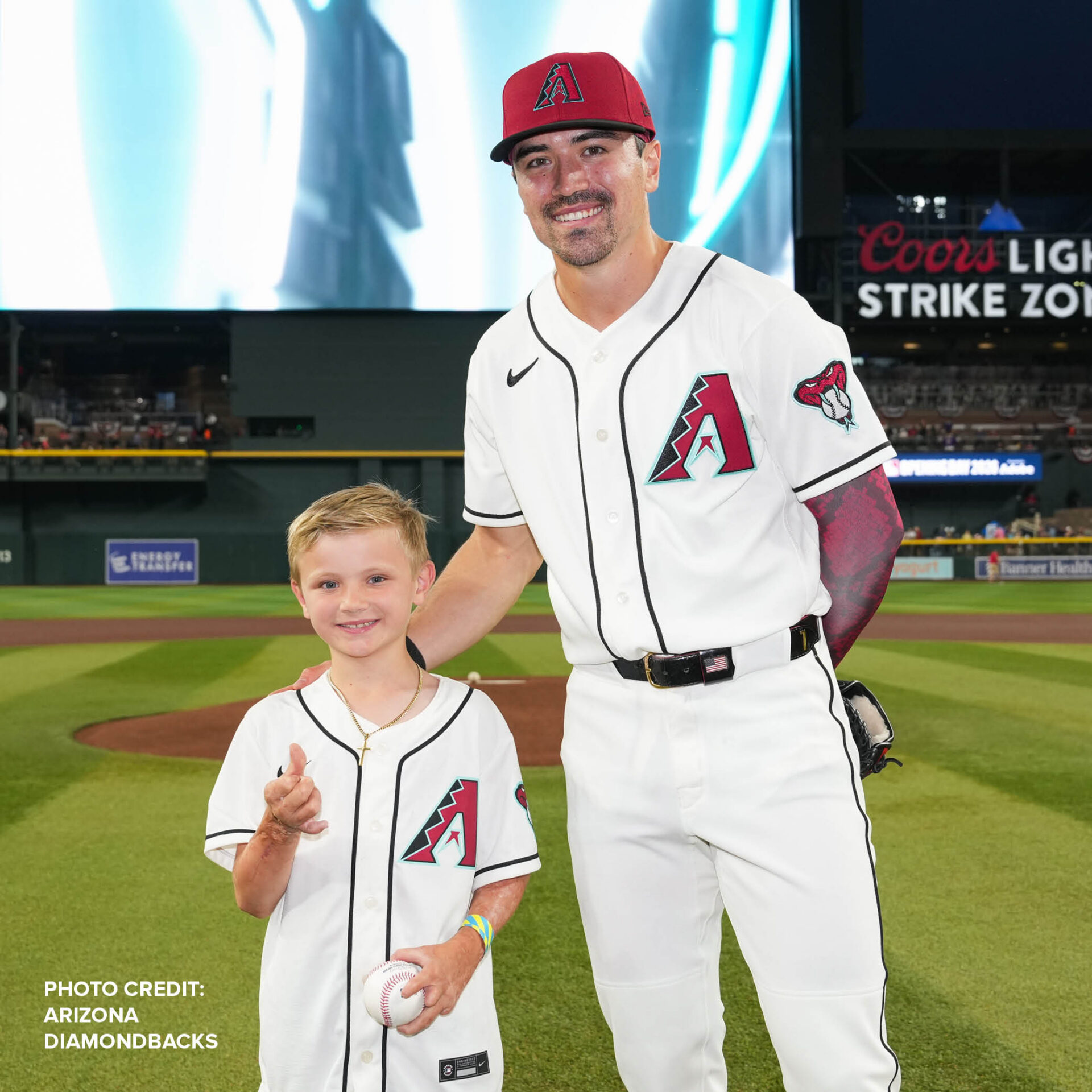
He plays baseball at Lake Havasu Little League and recently had an opportunity through the Challenged Athletes Foundation to visit the MLB Network. During his visit, Arizona Diamondbacks President and CEO Derrick Hall heard about Beauden, and invited him to throw the ceremonial first pitch during Opening Day, the biggest event of the year for the franchise.  

Beauden gladly accepted the offer without hesitation.  

“When we heard Beauden’s story, we knew we had to find a way to make him part of Opening Day,” said Derrick Hall, D-backs President, CEO, and General Partner. “Baseball has a unique way of bringing people together, and moments like this remind us what the game is really all about. Watching Beauden take the field in front of our fans was incredibly special for all of us.” 

Walking through the stadium tunnel and taking the field in front of thousands of fans to throw the first pitch at the Diamondbacks home opener was an unforgettable moment. To make it even more memorable, there to catch his pitch was none other than his favorite Dbacks player, Corbin Carroll.

When asked about his experience, Beauden summed it up simply saying, “This is the best day of my life!” 

Limb Loss and Limb Difference Awareness Month  

With 5.6 million people across the U.S. who have limb loss or limb difference, chances are you will encounter someone who has faced or is facing this difficult journey. April is Limb Loss and Limb Difference Awareness Month, a time to celebrate the resilience, strength, and stories of individuals like Beauden who are redefining what’s possible.  

“Caring for pediatric and amputee patients isn’t a one‑person sport, it’s a true team effort,” said Jillian. “During Limb Loss and Limb Difference Awareness Month, I also want to recognize the physical therapists, occupational therapists, and physicians who work alongside us every day. We’re just one part of the journey, and helping someone return to function, or get ready for their next adventure, takes all of us working together.” 

Beauden’s journey is a powerful reminder that limb loss and limb difference do not define one’s potential. Throughout the month and all year long, let’s support those with limb loss and limb difference.  

In honor of Limb Loss and Limb Difference Awareness Month, we’re sharing the story of Beauden Baumkirchner, an eight-year-old boy whose life changed dramatically after what seemed like a minor childhood injury. A skinned knee led to a rare and aggressive staph infection, resulting in nearly three months in the hospital, 22 surgeries, the loss of several fingers, and ultimately, bilateral above-knee amputation to save his life. Today, he plays baseball at Lake Havasu Little League and continues to inspire everyone around him with his determination and love for the game.

Renee DeHaan

One Step at a Time: Renee’s Journey to Everest Base Camp with Her Prosthetic Leg  

For Renee DeHaan, vice principal at Wasatch Middle School in Salt Lake City, the path to Everest Base Camp wasn’t just a physical trek—it was a personal triumph. Born with a missing right foot, a left club foot, and two digits on each hand, Renee has spent her life defying expectations. This spring, she added another milestone to her journey: hiking to Everest Base Camp using her prosthetic leg, supported by her longtime Hanger Clinic prosthetist and friend, Quincey Brabant, CPO

From Educator to Explorer 

Renee grew up in a family where possibility always took center stage. Her family lived by a simple, powerful motto: Figure It Out. Her parents, Steve and Linda Stirling, never let Renee’s limb differences define her, emphasizing ability over limitation. That mindset shaped Renee’s own outlook. She didn’t focus on what was missing, but on what was possible. 

Renee pursued a degree in Special Education at the University of Utah, determined to be a champion for children who needed someone in their corner—someone to believe in them, guide them, and help them discover their own strength. As a longtime educator and vice principal in Salt Lake City, Renee has spent decades empowering others while quietly pushing her own boundaries.  

With the help of her lower limb prosthesis and expert care from prosthetist Quincey at Hanger Clinic in Salt Lake City, she’s embraced a life full of movement, from daily walks to adrenaline-fueled activities like bobsledding and rock climbing. Her most recent challenge? Trekking to Everest Base Camp—one step at a time. 

Prepping for the Climb 

Renee’s passion for mountains runs deep. Her husband is a mountaineer, and she long admired Everest from afar. But when Quincey asked if she wanted to join a trek to base camp, Renee didn’t hesitate. “I’ve always studied the mountains,” she said. “I just wanted to go meet Everest.” 

Together, they prepared for the journey. Quincey customized Renee’s prosthesis to handle the rugged terrain and created an orthosis for her left club foot. They packed duct tape, wrenches, and tools—just in case. And being a fan of Crocs, Renee brought her pink sparkly Crocs, which turned out to be more comfortable than hiking boots. 

Facing Everest—and Herself 

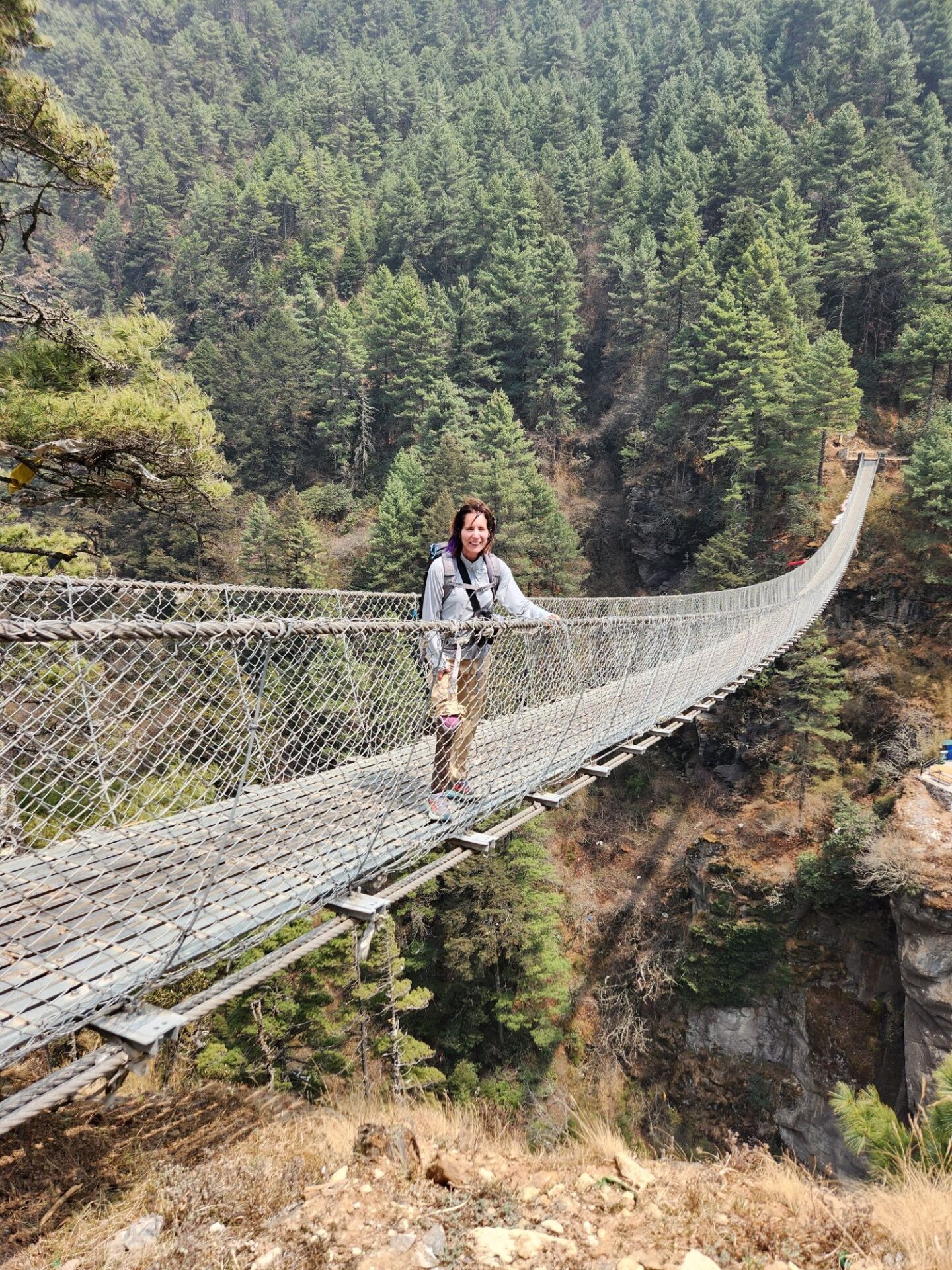
With 40 miles of uneven terrain, freezing temperatures, and high altitude, the trek was grueling. Renee’s luggage was lost on arrival, and just hours into the hike, she nearly fell off a cliff. But she kept going.  

“Everyone has their moment where you decide if you’re going up or down the mountain,” Renee said. “That was mine.” 

Quincey noted, “For Renee to hike through Nepal takes an enormous amount of energy—far more than for an able-bodied person. But her mindset was always, ‘I’m gonna get there.’” 

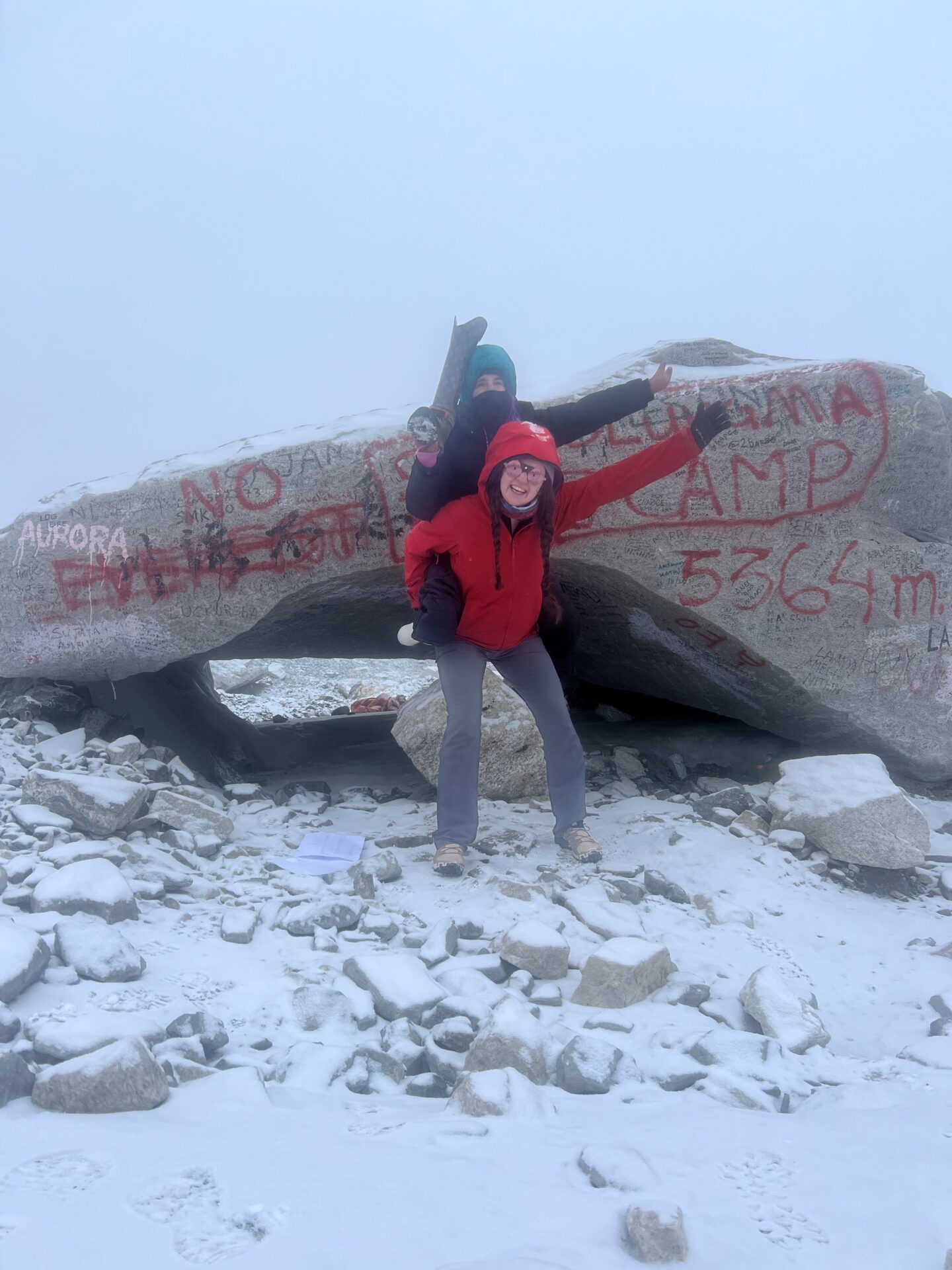
And she did. After nearly two weeks, Renee arrived at Everest Base Camp—17,598 feet above sea level. She camped overnight, made personal videos, and stood on the famous rock touched by generations of climbers. She even held her prosthetic leg high in the air, celebrating the moment. 

The Message Renee Wants to Share 

The weather had been cloudy. On the way down, Renee hiked to a village to catch a helicopter. As clouds rolled in, a Sherpa told her to turn around. It was at that moment that the clouds parted, and Renee saw the mountain one last time. “It was like Everest was giving me a final wave,” she said. 

“Success isn’t always about standing on top of the world,” Renee said. “It’s about standing when others told you to sit down.” She wants others facing physical challenges to know that limits don’t define you. “I learned the language of grit—the voice inside that says keep going.” 

Renee’s already planning her next adventure: climbing Mount Kilimanjaro with her husband. She shared, “I am surrounded by kind and supportive people. I am so grateful to have these opportunities and the prosthetic technology and support from my Hanger Clinic team that enables me to pursue them.” 

Nicole Grehn

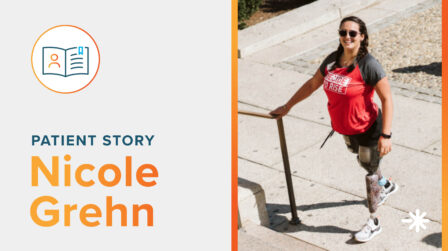
Nicole Grehn: Woman Finds Her Calling After Losing Both Legs

Nicole Grehn survived against all odds but lost both of her legs as a result of her traumatic experience. Now, she is giving back to others in the amputee community and beyond through her work as a trauma nurse at the hospital that saved her life.


On June 28, 2015, then-24-year old Nicole Grehn’s life changed forever. Nicole was on her way home from a graduation party when she unexpectedly collapsed in a gas station in a small town in Wisconsin. As fate would have it, the gas station was across from a hospital, where an ambulance had just pulled in—this stroke of luck would save Nicole’s life, though the fight was just beginning.

Over the course of 36 hours, Nicole’s heart stopped 78 times. She was shocked, induced into a coma, and put on a machine to keep her heart beating. During what resulted in a nine-day coma, Nicole’s heart was pumping at only 10 percent, causing her limbs to suffer from insufficient blood flow. Nicole was on the brink of death, and medics gave her family little hope of survival.

When Nicole came out of the coma, she found that doctors had been forced to amputate both her legs above the knee, to prevent severe septic shock and keep her alive. For a healthy, active young woman who had been a high school and college cheerleader and competitive swimmer, the loss of mobility was devastating. Nicole wasn’t sure what the rest of her life would look like.

Three months later, the medical mystery of Nicole’s heart was solved when she was diagnosed with catecholaminergic polymorphic ventricular tachycardia (CPVT), a rare genetic condition characterized by abnormal heart rhythm. The inherited gene mutation had gone undetected for 25 years.

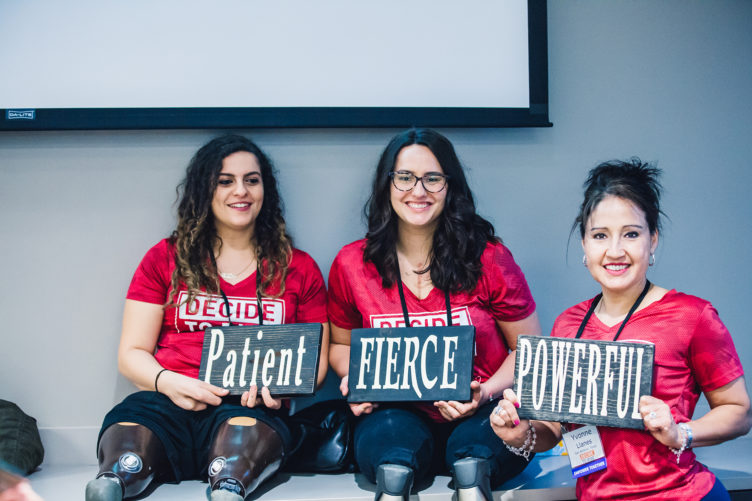
Shortly after her diagnosis, as Nicole was beginning the long process of rehabilitating and learning to walk again, she discovered Hanger Clinic’s Bilateral Above-Knee (BAKA) Bootcamp in Oklahoma City. Not knowing many other amputees and unsure what was even possible for someone missing both legs above-the-knee, Nicole decided to attend. It was at the 2016 BAKA Bootcamp that Nicole met other bilateral above-knee amputees who inspired her with their amazing stories and drive to walk independently with the help of peer support, hard work, and custom-designed prosthetic devices. On April 6, 2016, Nicole decided to leave her wheelchair for good.

“No one can prepare you for the emotional healing that happens at BAKA Bootcamp. It was there that, for the first time, the old Nicole started to come back out, and then new layers of me grew,” said Nicole.

I found Hanger Clinic and their amazing bootcamp for bilateral above-knee amputees. I was inspired … and have become part of a new family – my amputee family.

Nicole Grehn

Showing that anything is possible with enough dedication and a strong support system, Nicole is now a full-time, independent prosthetics user who has set challenging goals for herself and achieved them all. At the time of her collapse, Nicole had recently graduated from college with a BA in Biology and was working as a certified nurse’s assistant. After attending BAKA Bootcamp in 2016, Nicole decided to go back to school, and in December 2017, she graduated from Marquette University with a Master of Science in Nursing.

Nicole worked as a nurse at the same hospital in Milwaukee that saved her life, helping give back to the trauma patients from the unique vantage point of someone who has been through a similar struggle. She then worked to become a Doctor of Nursing Practice, and is now a nurse practitioner bringing expert care to her patients, including many who use prosthetics.

“Nursing school helped me learn to walk,” said Nicole. “I put my legs on every day to walk to school and the halls of the hospital. I worked in orthopedic trauma, so I had patients who had recently experienced an amputation, and I realized I could make a real impact on their lives. That’s why I decided to become a nurse practitioner. I personally understand what it’s like to be an amputee navigating the health care system and wanted to give back to my community so they can get the devices and care they need.”

I would never take my legs back at the expense of the friendships I have made, the love I have received, and my clear calling and purpose in life. I wouldn’t trade that for anything.

Nicole Grehn

In addition to her academic pursuits, Nicole currently mentors children and teens with limb loss and limb difference around the country at Camp No Limits. Through her career and volunteer work, Nicole’s unwavering goal is to help others in the amputee community.

Nicole shared, “I truly enjoy being a mentor with Hanger Clinic and at BAKA Bootcamp. I get to teach people how to walk again, and see myself in them. My purpose in life is to have joy and bring joy.”

See Nicole on NBC Nightly News

In 2018, NBC Nightly News featured Nicole’s inspiring story.

Finding the Optimal Prosthetic Fit at Hanger Clinic’s Integrated Care Center 

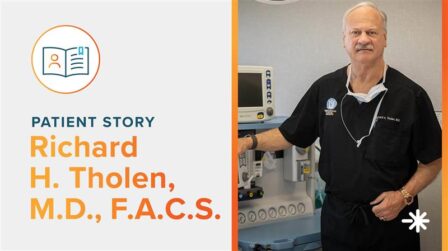
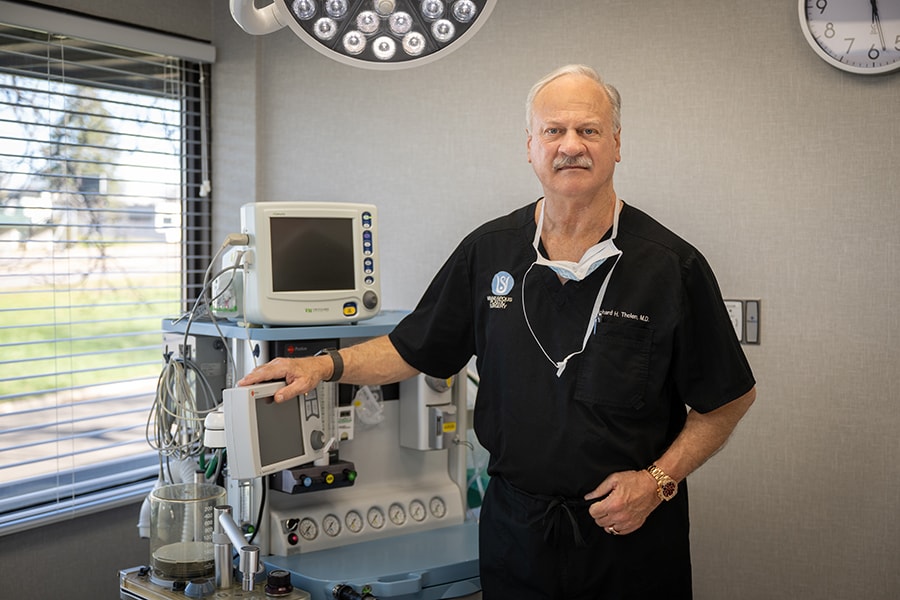
Dr. Tholen, M.D., F.A.C.S., a husband, father, grandfather, and plastic surgeon, never imagined that a zip-lining accident in Mexico would lead to an above-knee amputation. Determined to continue his active lifestyle and surgical career, he sought out expert prosthetic care, ultimately finding the right fit at Hanger Clinic’s Integrated Care Center in Chicago, IL

A Zip Line Adventure That Changed Everything 

Dr. Tholen’s journey as an above-knee amputee began unexpectedly at a friend’s wedding in Mexico. What was meant to be a thrilling zip-lining experience turned into a life-altering event when a braking maneuver caused his leg to become entangled in the zip line. The resulting knee dislocation and ligament damage led to nine surgeries, later resulting in an above-knee amputation. 

Despite the challenges, Dr. Tholen was determined to return to his active lifestyle and career as a plastic surgeon. Just 91 days after his injury, he was back in the operating room. 

Dr. Tholen shared, “I was fortunate to receive high-quality prosthetic care and an above-knee prosthesis from the beginning of my journey, which enabled me to continue working and enjoy an active lifestyle.” 

Seeking the Best Prosthetic Fit 

Initially receiving care in Rochester, Minnesota, Dr. Tholen transitioned to a provider in the Twin Cities, which better allowed him to maintain his prosthetic care and demanding work schedule. However, as his body changed over time, he noticed issues with the fit of his prosthetic socket—particularly the escape valve, which occasionally caught on the edge of the operating table during procedures, loosening the fit of his prosthesis. 

Determined to find a solution, Dr. Tholen connected with Kevin Carroll, Vice President of Lower Extremity Prosthetics at Hanger Clinic, and Leslie Green, Director of Patient Advocacy and Education. They recommended that he visit Ryan Caldwell, L/CP, at the Hanger Clinic Integrated Care Center in Chicago, IL

A Unique Approach to Prosthetic Care 

Dr. Tholen was immediately impressed by the Integrated Care Center’s innovative approach.  

“The facility offers a variety of real-world environments where amputees can test their prostheses, including a golf simulator, weights, kitchen, track, hill, stairs, ramps, and even a rock wall. This setup allowed Ryan to make real-time adjustments to my prosthesis, ensuring my prosthesis functioned optimally in real-world environments before I returned home,” said Dr. Tholen. 

Working with Ryan Caldwell, L/CP, Hannah Moody, MS, and his team, Dr. Tholen received a custom-designed socket tailored to his specific needs, providing optimal comfort and functionality. The new design included a protective shroud over the escape valve, preventing it from catching onto the operating table or steering wheel while driving. Knowing Dr. Tholen’s passion for automobiles, Tony Kapechuk, a technician at the Integrated Care Center, sourced carbon fiber with a metallic red finish to match his red car—an extra detail that made the prosthesis uniquely his. 

“I worked to develop a socket with lowered trimlines that is more comfortable, without sacrificing stability and control. My goal was to provide Dr. Tholen with the most comfortable fitting prosthesis that helped him to continue to work as a plastic surgeon, reach his activity goals, and achieve his greatest quality of life,” said Ryan. 

The Hanger Clinic Integrated Care Center

The Impact of Expert Care 

Dr. Tholen’s experience at Hanger Clinic reinforced his appreciation for the expertise and dedication of prosthetic specialists. Their ability to blend cutting-edge technology with practical solutions ensured he could continue his work as a surgeon without limitations. 

“The care I received was top-notch,” Dr. Tholen shared.

Dr. Tholen

“The team has so much knowledge in their respective specialties, utilizing new research and technology while building off past knowledge and tricks learned along the way. As a plastic surgeon, I respect the time and effort they dedicate to each and every patient to ensure they achieve optimal results. 

I am grateful that Leslie and Kevin referred me to Ryan at the Integrated Care Center, and for the care I received. This has only enhanced my ability to help others in my profession as a plastic surgeon and enabled me to continue an active life outside of work.” 

Whether traveling with his wife Sami, spending time with his six children, golfing, or teaching plastic surgery abroad, Dr. Tholen’s prosthesis supports his passions without limitations. 

Kemit Blog

Kemit Proves that Passions Can Thrive After Amputation 

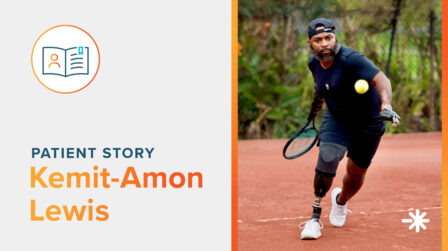
Growing up in Saint Croix, Kemit developed a passion for the ocean and tennis. Despite the life-altering challenges he faced due to multiple amputations from septic shock, Kemit’s determination and the use of prostheses have allowed him to reclaim his passions and inspire others with his journey.

Childhood in Saint Croix

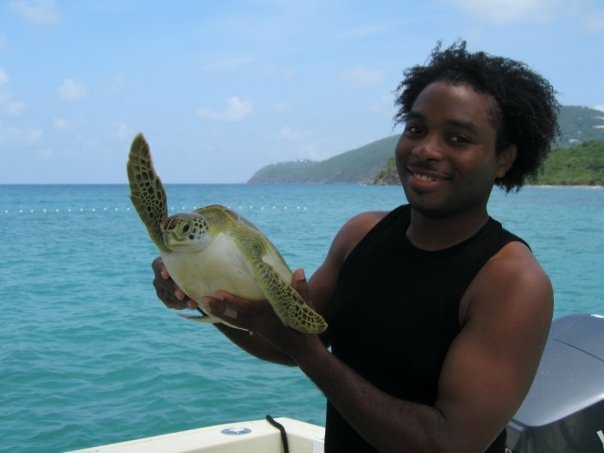
Kemit grew up on the island of Saint Croix in the US Virgin Islands. He loved the ocean, and his family would swim, snorkel, and spend the entire day on the beach.

“I still remember my first time seeing dolphins, turtles, and reefs. I became interested in ocean conservation at a young age and wanted to become a marine biologist,” said Kemit.

Around middle school, he quickly fell in love with tennis, which became a big part of his life. He loved the geometry used on the court, the mental toughness needed for the game, and that it is an individual sport, so the outcomes all came down to him and what he could do with the racquet.

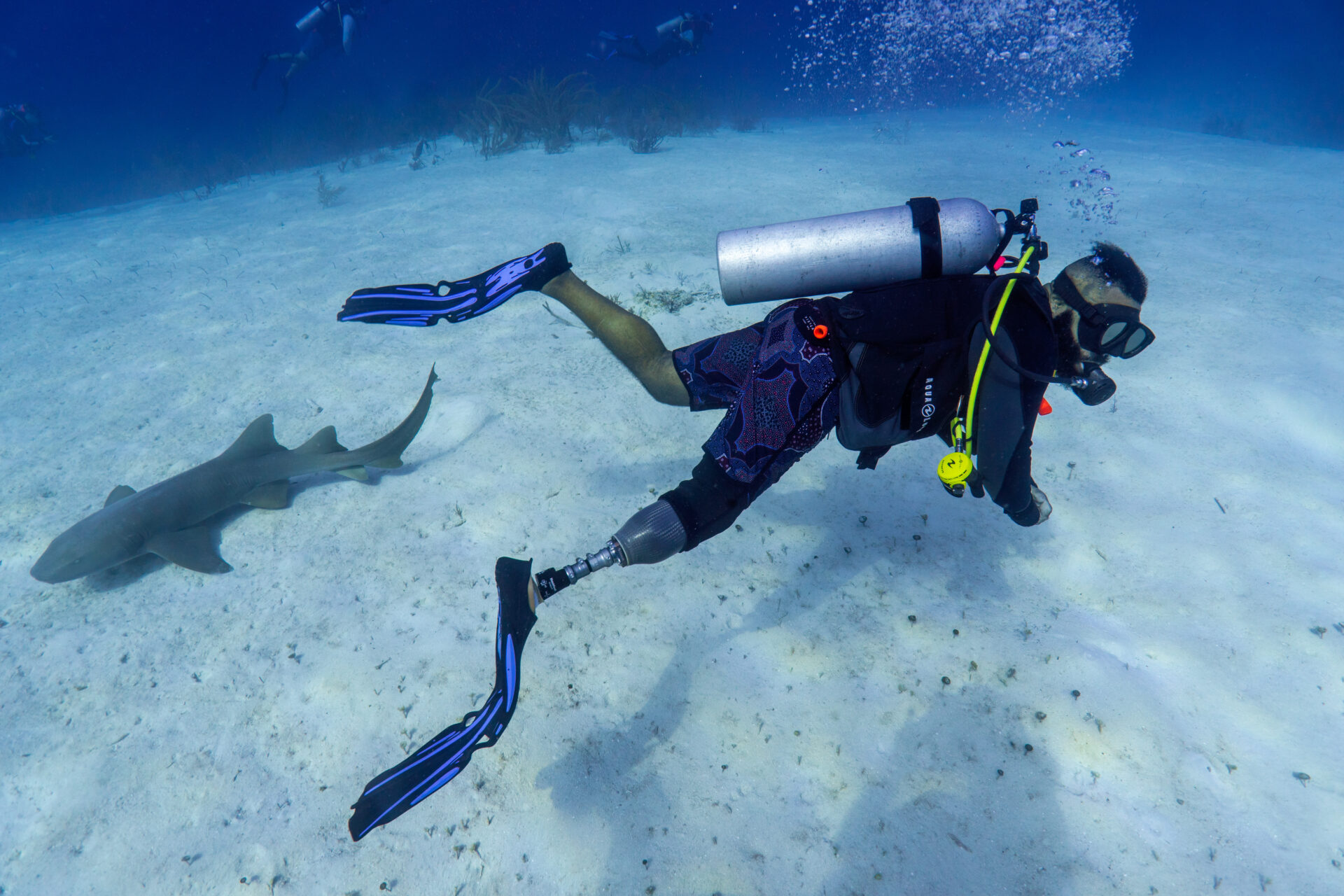
“I was determined to have a career in ocean conservation and was able to go to Saint Croix Central High School, where they had a marine science program. There, I also learned to dive and discovered I enjoyed dancing. Diving became a big part of my life and career at The Nature Conservancy, where I was diving four to five days a week. I have had the opportunity to dive in many Caribbean countries and around the world and to share best practices for coral reef preservation,” said Kemit.

Kemit

Facing a New Reality

In July 2020, Kemit went to dinner with his dad. He wasn’t feeling well that night and went home early. By five o’clock the next morning, he and his closest friend, Karisma, arrived at the emergency room.

“They checked his vitals and realized the situation was worse than we thought. He needed to be airlifted. That’s when the longest night of our life began. His hands had no life, I had never seen anything like that,” said Karisma.

Kemit was in an induced coma for two weeks.

He recalls, “I was told that I had gone into septic shock. I ended up receiving several amputations to save my life: my right hand at the wrist, left fingers and part of the left thumb, right leg below the knee, and left toes. I remember that, in the rehab hospital, I had written on my board that my biggest fear was not getting back to everything that I love.”

Embracing Life with Prostheses

Kemit was very strong and healthy. He wanted to return to the life he loved. He decided to embrace prostheses and use the technology and tools available to him.

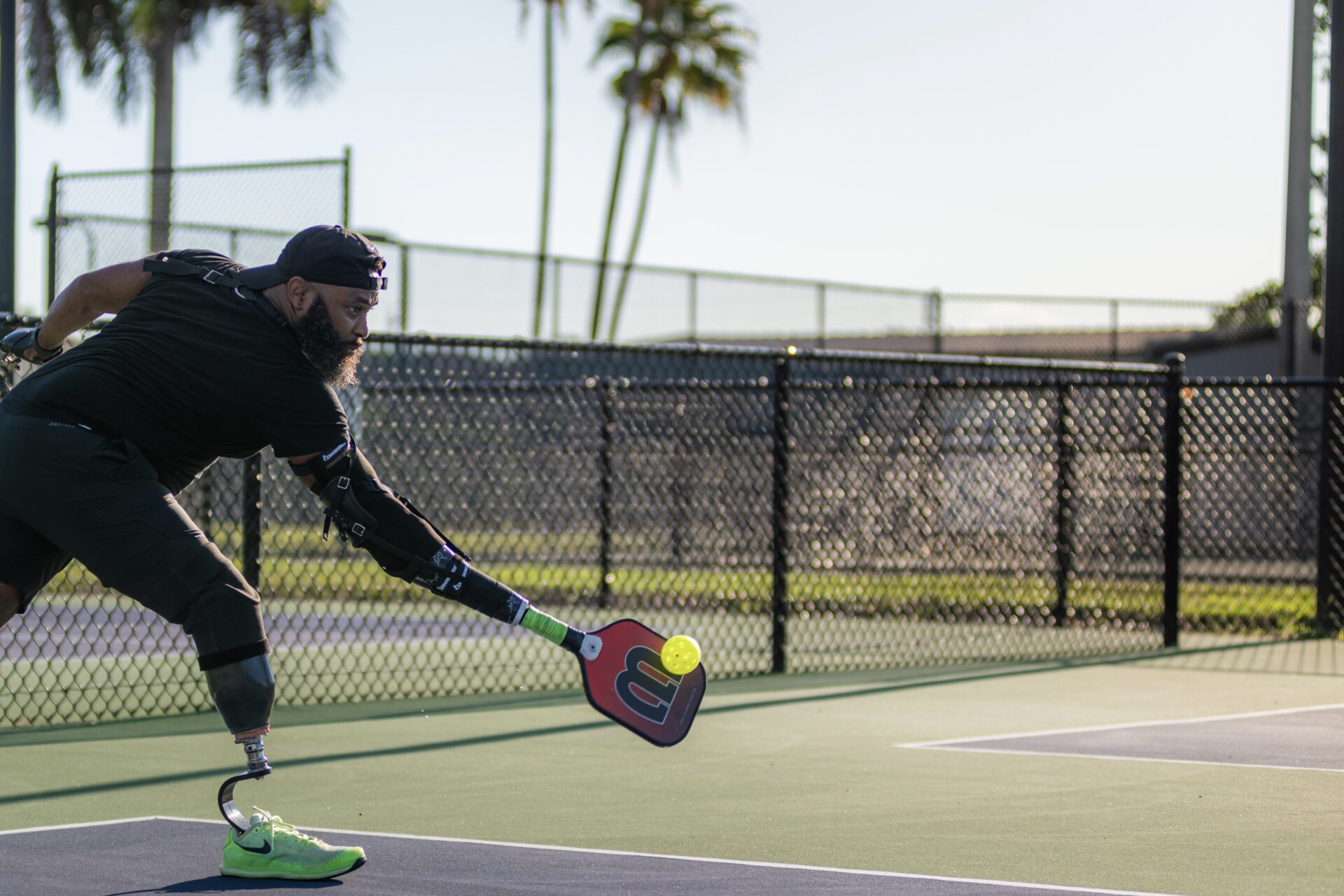
“Prostheses allow me to get out of a wheelchair and walk, run, dance, play tennis, and dive again.

Kemit diving

With my different levels of limb loss and types of amputations, I use a variety of prostheses, from shoe fillers to my upper limb prosthesis, below-knee prosthesis, running blade, prosthetic diving leg, and prosthetic tennis racquet.

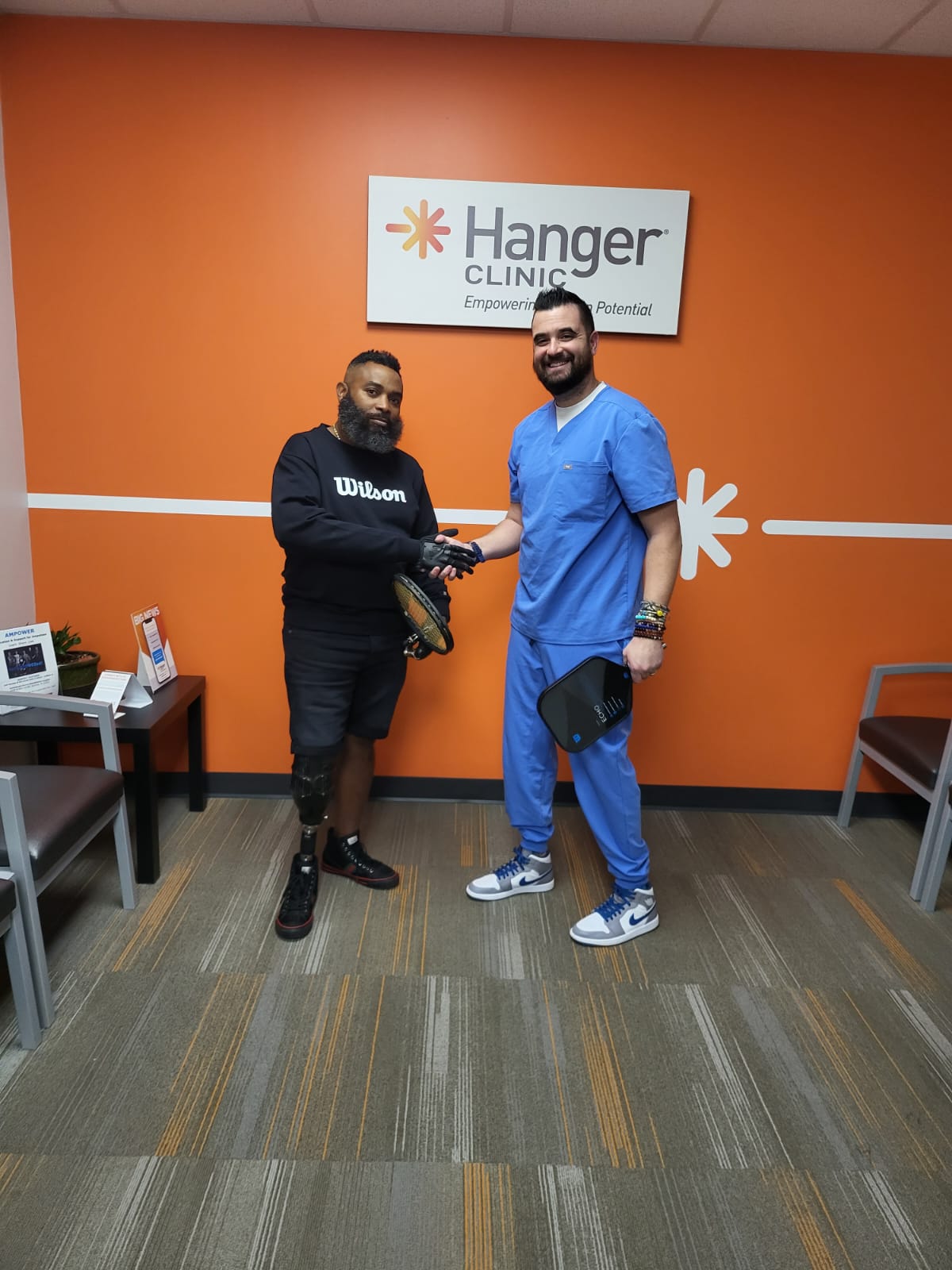
Brett, my Hanger Clinic prosthetist, has been crucial in supporting me and providing me with the tools to return to the activities I love. We have become close, like family. He listens and hears what I need. I was also fortunate to have the opportunity to work with the engineers at Wilson Sporting Goods to help design a stronger and better-structured prosthetic tennis racquet. People really care about improving our quality of life,” said Kemit.

Hanger Clinic prosthetist Brett Rosen, L/CPO, shared, “Kemit came to us and really wanted to take things to the next level. I was fortunate enough to grow up in this field. I had a dad who owned a private practice and experienced throughout my life how the prosthetic field helps to give someone their life back. It was a rewarding opportunity to help Kemit get back to the courts and be able to play tennis at a competitive level.”

Encouraging Others to Thrive

“I love being challenged or pushed and doing something outside the box that hasn’t been done before. Life goes on after amputation, and I want others to know that, too. I love that tools have been built for me that allow me to be just as independent as I was in the past.

I started by relearning to walk again, completing tasks at home, and taking care of myself. Now, I am able to travel, walk through airports, live independently, and return to the activities I love. The tools, support, and resources are there; don’t be intimidated to ask for them and enjoy the activities you love,” shared Kemit.

Kemit
prosthesis sweating

8 Tips for Managing Excessive Sweating in Your Prosthesis

Living with a prosthesis can bring unique experiences. One aspect to be mindful of is excessive sweating inside the prosthetic socket, which can lead to discomfort and skin irritation. Prosthetist Wendy Remington Brewer, CPO, shares several strategies you can use to manage and reduce sweating while continuing to stay active, ensuring a more comfortable experience. 

1. Optimize Socket Fit  

Your prosthetist can provide valuable guidance on managing sweating and ensuring a proper fit for your prosthesis.  

Wendy shared, “The best strategy for ensuring that you have the least amount of perspiration in your socket is having the best socket fit. Attend regular follow-ups with your clinician every 3-6 months, make sure your supplies are in good condition, and check to be sure your prosthesis fits well. Friction causes sweat and sweat then leads to more friction. We want to make sure everything fits nice and intimately to reduce any extra friction within your socket.” 

2. Use Moisture-Wicking Liners

Prosthetic liners are designed with special wicking fabrics that pull moisture away from your skin and into the liner material. This helps prevent sweat from pooling directly against your residual limb. 

“There are different types of liners and suspension systems as well as a sheath or a textile that you might be able to wear underneath your liner to help prevent excessive sweating,” said Wendy. 

3. Apply Antiperspirants 

Over-the-counter antiperspirants or those specifically formulated for amputees can help control sweat buildup.

Wendy said, “Consider selecting a fragrance-free option to avoid skin irritation and using it overnight. Brands such as Gillette Clinical and Secret Clinical can be good options.” 

4. Dress for Sweat Control 

Wear lightweight, loose-fitting clothing made from breathable fabrics like cotton. Athletic clothing designed to wick moisture away from the skin can also be beneficial. Carrying extra clothing can help you stay fresh and comfortable throughout the day. 

5. Maintain Good Hygiene 

Regularly clean your prosthetic socket, liners, and socks to prevent bacterial growth and odors. Use mild soap and water and ensure everything is thoroughly dried before use. 

6. Use Powders and Lotions 

“Powders and lotions designed for amputees can help control moisture and reduce friction. These products can be applied to your residual limb and inside the socket to keep things dry and comfortable,” said Wendy. 

7. Consider Medical Treatments 

Wendy continued, “Some physicians may recommend medical treatments such as Botox injections to manage excessive sweating. Each of these solutions has its own indications and contraindications, so it is important to discuss these options with your physician and prosthetic provider.” 

8. Drying Towel 

Prosthetic sockets and liners are generally airtight and can trap perspiration, leading to excess movement in the system which can cause discomfort. On hot days or when engaging in activities, consider having a moisture-wicking towel on hand. If needed, you can remove the prosthesis to cool, towel dry the limb and prosthesis, and then reapply the prosthesis.

Staying Active with your Prosthesis 

Remember, sweating is a natural part of life for everyone, and staying active and moving with your prosthesis is important to maintaining a healthy lifestyle. If you are looking for activities to help you stay active, we encourage you to explore these exercises: 

We hope you find incorporating these eight tips can help you better manage excessive sweating and enjoy a more comfortable experience with your prosthesis. For additional assistance, work with your Hanger Clinic prosthetist to find the best solutions for your needs. 

Do you have any questions that you would like to have answered? You can submit your questions at hclinic.info/OPQuestions.

Justin Dodge

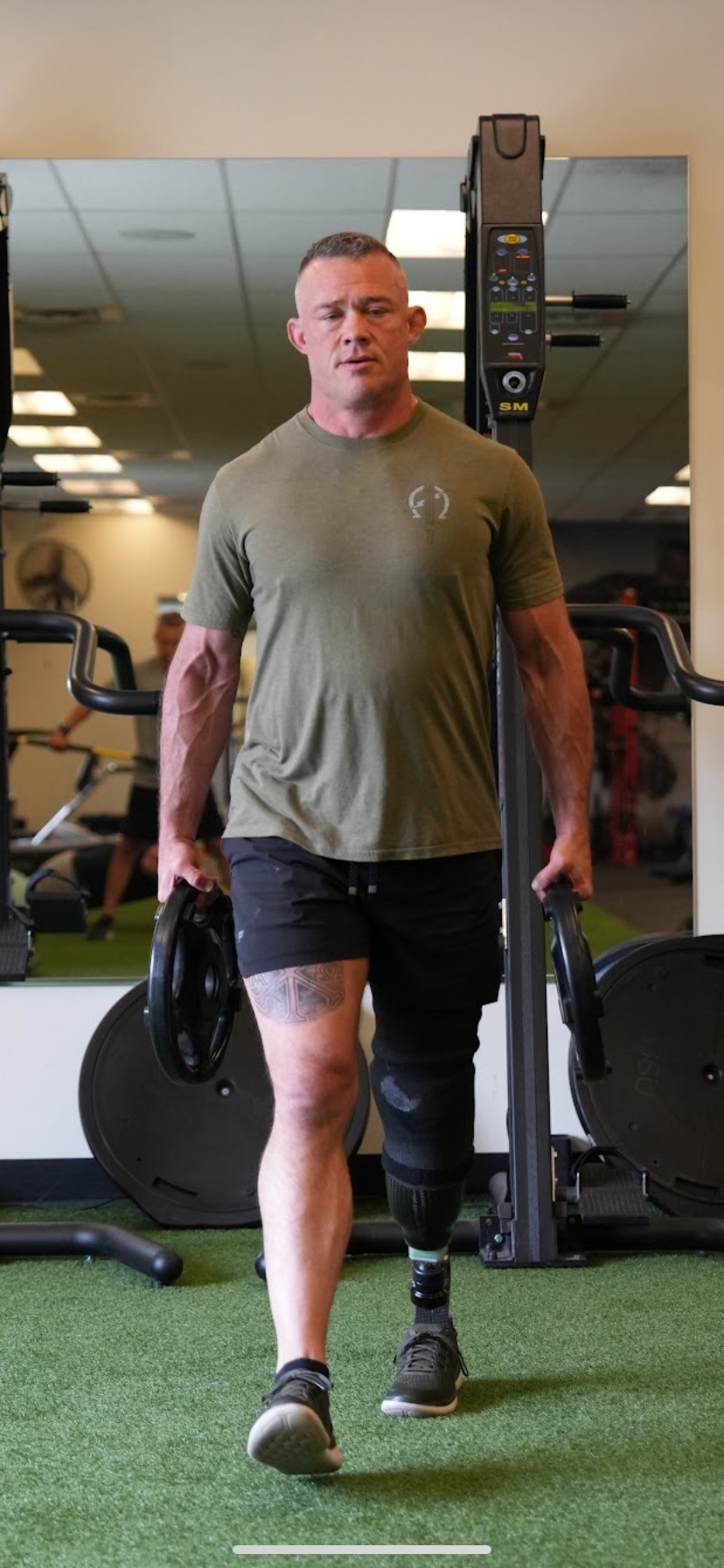
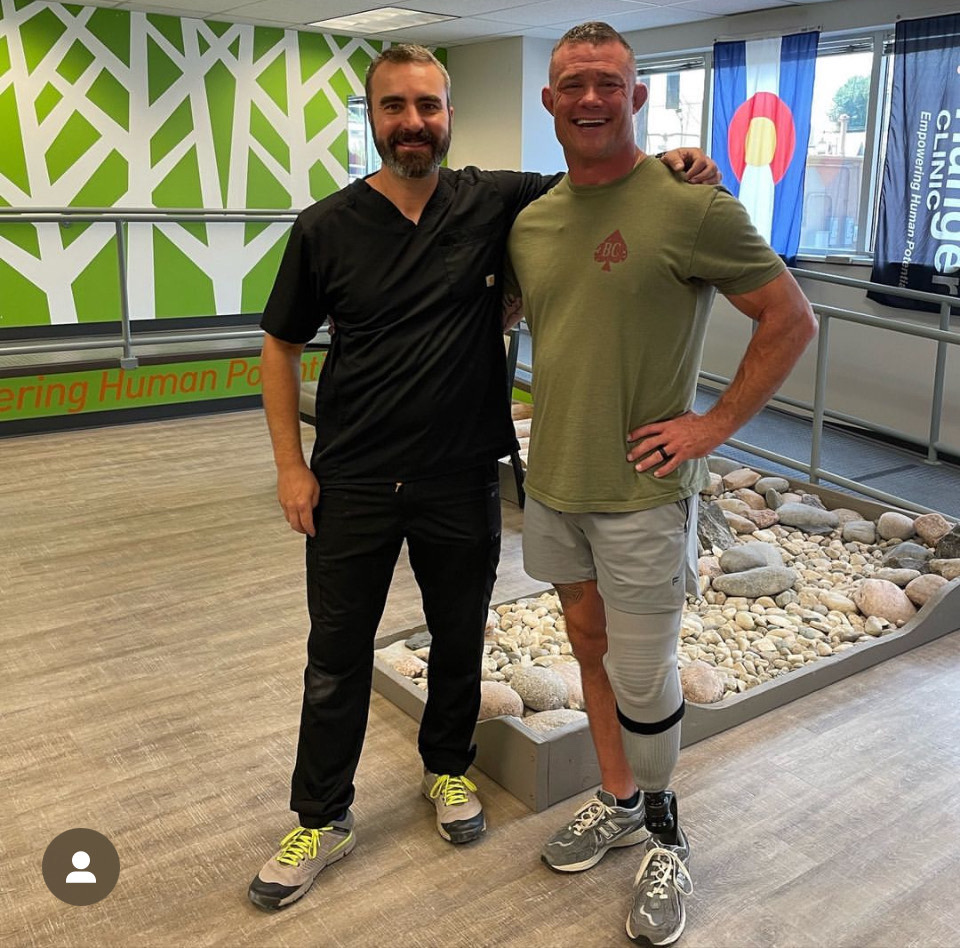
Sergeant Justin Dodge Thriving With Prosthetic Leg After Being Injured at Nuggets Parade

After a life-changing incident during a Denver Nuggets championship parade, Sergeant Justin Dodge faced the challenge of rebuilding his life. Despite undergoing a below-knee amputation, Justin’s unwavering determination, supported by his family and medical team, helped him get back on his feet with his below-knee prosthesis and fully engage as a father and SWAT team member again.


The Denver Nuggets had clinched their first-ever NBA Championship, and it was parade time in Denver. Sergeant Justin Dodge was diligently working security, stationed alongside one of the fire trucks carrying the Nuggets players, trying to protect paradegoers who had moved onto the street. It was then that the fire truck rolled over his left leg and painfully pinned him.

“That moment felt like it stretched out in slow motion. My instinct was to position myself to protect my knee from being crushed. I remained conscious the whole time. Before being taken to the hospital, I removed my gear and handed it to one of my fellow officers to keep for me until I made it back,” said Justin.

After his leg was freed, tourniquets were applied and saved Justin’s life as he was rushed to Denver Health. Chair of the Department of Orthopedics, Dr. Mauffrey, happened to be working that day, and Justin immediately went into surgery under his care.

The Road to Recovery

Despite multiple surgeries and best efforts to save his leg, Justin ultimately underwent a below-the-knee amputation and skin grafting.

“I tried to wake up with a smile, do things that would make tomorrow better, and go to bed with a smile. Some days were good, and some were bad. There was never a moment when I doubted my ability to walk and be mobile again. During recovery, I set daily tasks for myself and mental and physical goals to tackle each day. At first, the tasks seemed small, making it to the bathroom on my own and eventually scooting up and down the stairs in my house. These tasks were exhausting. But I persisted. I went back to the gym, returned to activities I love, even if they were different than before, and worked on regaining my strength and physical stamina,” said Justin.

Justin Dodge

A Team of Support

Supported by a dedicated team, Justin embarked on his journey to rebuild. After fitting his prosthesis, he embraced the challenge of learning to walk again. Though the process was difficult, his determination never wavered.

“I am married and have three kids, ages 22, 19, and 17. I prioritize my family above all else, closely followed by my commitment to saving lives. We are an incredibly active family, and being an active dad is important to me. I wanted to return to being the fun, active dad who planned trips and actively participated in my kids’ lives.

I had an incredible group of doctors, family, friends, fellow officers, and trainers supporting and helping me. I called Hanger Clinic and met with Jeff Talen, CPO the next day. I eventually worked with Brad Intres, CPed, CPO, Zach Harvey, CPO, and Molly Jones, Community Care Coordinator. Zach’s expertise enabled me to have a functional prosthesis while I recovered. All of them were there for me, addressing any questions and concerns and helping me through the recovery process.

Justin Dodge

Once I received my prosthesis, I was ready to learn to walk again. I put a lot of work in. Walking wasn’t effortless at first, but I was determined to make it happen. I feel like I’m thriving through a horrible injury and doing everything I can to make the best out of it,” said Justin.

Along with my family and friends, the team at Hanger Clinic has been instrumental in my progress. They make each of their patients feel like you are the most important person, listening to your needs, helping set goals, and working with you through your challenges. They really do change people’s lives.

Justin DodgeHanger Clinic Patient

A New Purpose

Justin shared, “This experience has given me a renewed purpose – to excel not just physically but in all aspects of life so I can help others facing adversity. I want to let others know you can overcome difficult times and challenges, even if the outcome is not what you originally thought it would be or should look like. Whether it’s a physical setback like mine or any other challenge, perseverance and mental strength are key.”

Justin’s journey is a testament to the power of resilience. He was cleared to return to 100% on a full-time tactical unit. In addition to returning to work, he took his son on a plane to attend a recruiting visit for a scholarship and has taken several trips to visit his daughters. With each step forward and the assistance of his prosthesis, he embodies the possibility of a remarkable comeback.